Artist
Billy Strings
US bluegrass
Billy Strings is an American singer, songwriter, guitarist, and multi-instrumentalist born William Lee Apostol on October 3, 1992, in Lansing, Michigan. Known for extraordinary flatpicking, high-energy live performances, and a willingness to push bluegrass far beyond traditional boundaries, Strings has become one of the most prominent figures in modern acoustic music.
Raised around bluegrass by his stepfather and musical mentor Terry Barber, Strings learned the traditional music of artists such as Doc Watson, Bill Monroe, Lester Flatt, Earl Scruggs, and Tony Rice while also developing interests in rock, metal, psychedelia, and improvisational music. That combination eventually became central to his own sound.
After building his reputation through relentless touring, Strings broke through nationally with albums including Turmoil & Tinfoil, Home, Renewal, and Me/And/Dad. His 2019 album Home won the Grammy Award for Best Bluegrass Album, while his increasingly adventurous concerts attracted an audience extending well beyond traditional bluegrass.
Strings signed with Reprise Records in 2024 and released both Live, Vol. 1 and the expansive studio album Highway Prayers. The two projects earned consecutive Grammy Awards for Best Bluegrass Album, giving him three career Grammy wins through 2026. His 2026 album So Much for Goodbyes, produced with T Bone Burnett, became one of his most personal records, shaped by the death of his mother and themes of grief, memory, family, and survival.
By combining traditional bluegrass musicianship with extended jams, psychedelic textures, rock intensity, and deeply personal songwriting, Billy Strings has helped introduce bluegrass to a new generation while becoming one of the genre's most important contemporary performers.
Featured in The Gatefold
Studio albums

Similar Artists
History
Billy Strings was born William Lee Apostol on October 3, 1992, in Lansing, Michigan. His early life was complicated by addiction and family instability, but music became a constant source of connection and eventually a path toward a very different future.
After the death of his biological father when Billy was young, his mother remarried Terry Barber, an accomplished amateur bluegrass guitarist who became both his stepfather and his most important early musical teacher.
Barber introduced him to traditional bluegrass and old-time music at a very young age. Billy began playing guitar as a child and quickly absorbed the music of artists including Doc Watson, Bill Monroe, Lester Flatt and Earl Scruggs, Ralph Stanley, and Tony Rice.
His aunt reportedly gave him the nickname Billy Strings, recognizing how naturally the young musician gravitated toward stringed instruments.
Bluegrass was not his only musical interest.
As a teenager, Strings became fascinated with rock and heavy metal and played electric guitar in heavier bands. That period exposed him to a very different kind of energy, distortion, and intensity that would later find its way back into his acoustic music.
His teenage years were also difficult. Addiction affected his family, and Strings has spoken openly about his own exposure to drugs and instability during that period.
Eventually, music became part of his escape from that environment.
After high school, Strings moved toward Traverse City, Michigan, where he entered a thriving local acoustic-music scene. His guitar playing quickly attracted attention.
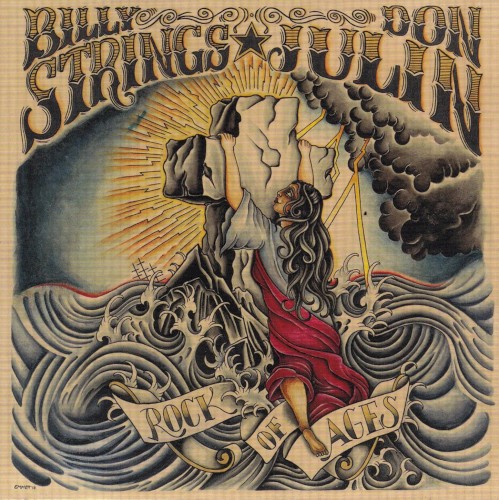
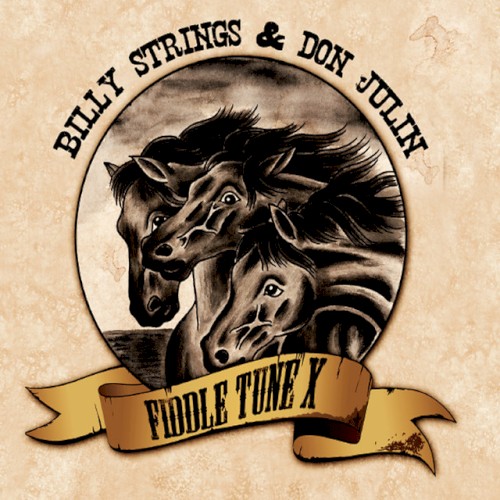
One of his most important early musical partnerships was with mandolin player Don Julin. The two performed extensively together and developed a reputation for exceptionally fast and adventurous acoustic playing.
Strings and Julin recorded together and toured as a duo, helping Billy develop the live-performance skills that would become fundamental to his career.
By the middle of the 2010s, Strings was increasingly performing under his own name.
He relocated to Nashville in 2016, placing himself at the center of the American roots and bluegrass industry.
His breakthrough independent album, Turmoil & Tinfoil, arrived in 2017.
The record demonstrated that Strings was not interested in simply recreating traditional bluegrass. Songs such as "Meet Me at the Creek," "On the Line," and the title track combined high-level acoustic musicianship with darker songwriting, extended instrumental sections, and influences that stretched into rock and psychedelia.
"Meet Me at the Creek" became especially important to his live identity. What began as an acoustic bluegrass composition could expand dramatically in concert through long improvisational passages.
Strings' rapidly growing audience attracted the attention of Rounder Records, one of the most important labels in American roots music.
His first Rounder album, Home, arrived in 2019.
The record pushed his sound further beyond conventional bluegrass. Tracks including "Taking Water," "Away from the Mire," "Watch It Fall," "Enough to Leave," and "Home" blended acoustic picking with atmospheric production, personal songwriting, and psychedelic textures.
Home reached No. 1 on Billboard's Bluegrass Albums chart and earned Strings his first Grammy Award for Best Bluegrass Album.
The award significantly expanded his profile, but his reputation was increasingly being built onstage.
Billy Strings concerts developed into events that could appeal simultaneously to traditional bluegrass listeners, jam-band fans, rock audiences, and musicians fascinated by instrumental improvisation.
His core band became an essential part of that sound, featuring musicians capable of moving rapidly between tightly arranged bluegrass and extended improvisational passages.
The concerts also drew comparisons to the culture surrounding the Grateful Dead, where individual performances, changing setlists, improvisation, and audience participation were central to the experience.
Strings returned in 2021 with Renewal.
The album expanded both his songwriting and musical vocabulary, featuring songs including "Know It All," "Secrets," "Love and Regret," "Fire Line," and "Hide and Seek."
Rather than using technical guitar ability as the primary focus, Strings increasingly emphasized songwriting, emotional themes, and full-band arrangements.
Renewal earned another Grammy nomination for Best Bluegrass Album, while "Love and Regret" received a nomination for Best American Roots Performance.
His next album was deeply connected to the person who had originally taught him bluegrass.
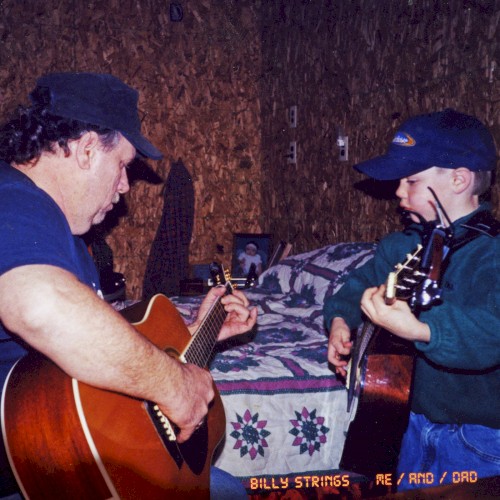
Released in 2022, Me/And/Dad paired Strings with his stepfather Terry Barber.
The project focused largely on traditional material the two had played together for years. Rather than presenting bluegrass as something Strings had moved beyond, the album showed that the music remained the foundation underneath everything else he was doing.
The record featured respected musicians including Jerry Douglas, Ron McCoury, and Rob McCoury and earned another Grammy nomination for Best Bluegrass Album.
Strings' profile continued growing outside bluegrass.
He collaborated with Willie Nelson on "California Sober" in 2023. The song earned a Grammy nomination for Best American Roots Song and represented a connection between one of country's most established icons and a newer generation of roots musicians.
Strings also contributed to recordings by artists across country, bluegrass, Americana, and rock, while his live performances moved into increasingly large theaters, amphitheaters, arenas, and festival headline slots.
In 2024, Strings entered another important phase of his career when he signed with Reprise Records.
That year produced two major releases.
Live, Vol. 1 finally gave his rapidly expanding audience an official live album capturing the improvisational side of his music. The record won the Grammy Award for Best Bluegrass Album at the 2025 ceremony.
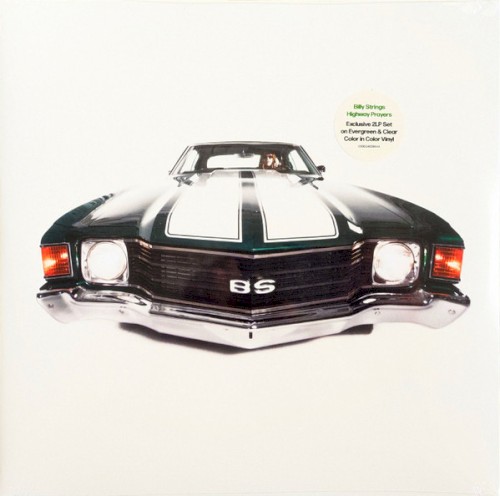
Only months later, Strings released Highway Prayers.
Produced with Jon Brion, the sprawling 20-song album pushed his studio sound into country, folk, psychedelic music, traditional bluegrass, instrumental picking, and experimental arrangements.
Songs including "Leadfoot," "Seven Weeks in County," "Stratosphere Blues / I Believe in You," "Gild the Lily," and "Richard Petty" demonstrated the range of the record.
The album became another major commercial breakthrough and further established Strings as an artist capable of expanding bluegrass without abandoning its musical foundations.
At the 2026 Grammy Awards, Highway Prayers won Best Bluegrass Album, giving Strings his third career Grammy Award. :chatgpt-content-reference{index="1"}
During this period, Strings also continued building connections with artists from outside traditional bluegrass.
His collaborations and guest appearances included musicians such as Willie Nelson, Post Malone, Ringo Starr, Dierks Bentley, Molly Tuttle, Marcus King, and numerous bluegrass and roots performers.
His ability to move naturally between these worlds became one of the defining characteristics of his career.
Then his life changed dramatically.
Strings' mother, Debra Apostol, died in 2025.
The loss became the emotional foundation for his next album.
Strings entered Nashville's Sound Emporium in January 2026 with producer T Bone Burnett and began recording what became So Much for Goodbyes.
Released on August 28, 2026 through Reprise Records, the album was explicitly created as a response to his mother's death and the complicated emotions surrounding grief, family, memory, addiction, love, and mortality. :chatgpt-content-reference{index="2"}
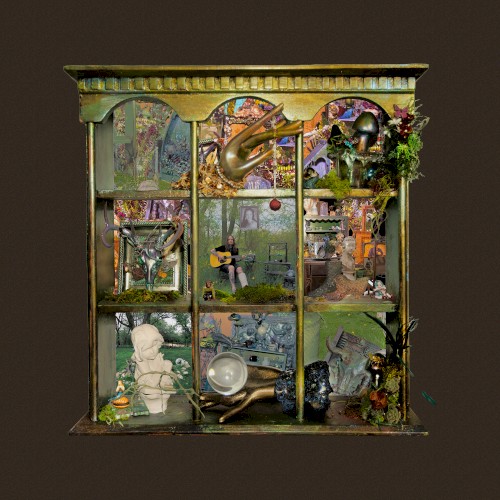
The album contains 16 tracks, including "I'm One of Those," "Burn the Other End," "Carry Us Home," "Lucid Daydream," "10,000 Miles From a Friend," "Still I Crash," and the closing instrumental "Debra's Waltz." Artwork created by his mother was used as part of the album's visual presentation. :chatgpt-content-reference{index="3"}
So Much for Goodbyes represented another evolution in Strings' career.
The extraordinary instrumental ability remained, but the focus increasingly shifted toward songwriting and emotional expression. The guitar was not simply being used to demonstrate technical ability. It became part of the way Strings processed grief.
That evolution helps explain why Billy Strings has become such an unusual figure within modern bluegrass.
At a technical level, he is one of the most recognizable flatpicking guitarists of his generation. He can perform traditional fiddle tunes, bluegrass standards, and Doc Watson material with deep respect for the original language of the music.
But a Billy Strings concert can also move into extended improvisation, psychedelic soundscapes, heavy guitar effects, rock covers, or long transitions between songs.
His audience similarly crosses traditional boundaries.
Bluegrass fans hear a musician deeply connected to the history of the genre. Jam-band listeners hear improvisation and constantly changing setlists. Rock audiences hear intensity and guitar playing that can rival an electric band even when performed on acoustic instruments.
That combination has allowed Strings to become one of the rare bluegrass artists capable of regularly performing in large arenas without fundamentally abandoning the genre.
His story also gives the music unusual emotional weight.
Addiction, family, loss, recovery, isolation, love, and survival repeatedly appear in his songwriting. Those subjects connect the traditional storytelling of bluegrass with experiences drawn directly from his own life.
From the Michigan picking circles of his childhood to Grammy-winning albums and sold-out arenas, Billy Strings has built a career around both preservation and reinvention.
He clearly understands where bluegrass came from.
What makes him significant is how determined he is to discover where it can go next.
Artist Facts
1. Billy Strings' real name is William Lee Apostol, and the nickname "Billy Strings" came from an aunt who recognized his fascination and ability with stringed instruments at a young age.
2. Strings learned bluegrass largely from his stepfather Terry Barber, and the two eventually recorded an entire album together, Me/And/Dad, in 2022.
3. Billy Strings has won three Grammy Awards for Best Bluegrass Album, for Home, Live, Vol. 1, and Highway Prayers.
4. Despite being best known as a bluegrass guitarist, Strings grew up listening to and playing heavy metal and rock, influences that still appear in his improvisational live performances.
5. His 2026 album So Much for Goodbyes was created in response to the death of his mother, Debra Apostol, and features her original artwork as part of the album's presentation.
FAQ
- What is Billy Strings' real name?
Billy Strings' real name is William Lee Apostol. He was born on October 3, 1992, in Lansing, Michigan. The nickname Billy Strings was given to him when he was young because of his ability and fascination with stringed instruments.
- What genre is Billy Strings?
Billy Strings is primarily associated with bluegrass, progressive bluegrass, Americana, and jam music. His sound also incorporates psychedelic rock, folk, country, heavy rock, and extended improvisation while remaining rooted in traditional acoustic bluegrass instrumentation.
- What is Billy Strings' most famous album?
Home, released in 2019, was Billy Strings' major national breakthrough and won his first Grammy Award for Best Bluegrass Album. Renewal and Highway Prayers further expanded his audience, while So Much for Goodbyes became one of his most personal albums.
- What are Billy Strings' most famous songs?
Some of Billy Strings' best-known songs include "Dust in a Baggie," "Meet Me at the Creek," "Away from the Mire," "Taking Water," "Watch It Fall," "Know It All," "Love and Regret," "California Sober," "Leadfoot," and "Seven Weeks in County."
- Is Billy Strings still making music?
Yes. Billy Strings remains an active recording and touring artist. His latest studio album, So Much for Goodbyes, was released through Reprise Records on August 28, 2026. Produced with T Bone Burnett, the album followed the Grammy-winning Highway Prayers and was inspired by the death of Strings' mother.