Artist
Ms. Lauryn Hill
Ms. Lauryn Hill is an American rapper, singer, songwriter, producer, and actress born Lauryn Noelle Hill on May 26, 1975, in East Orange, New Jersey, and raised in South Orange. Known for seamlessly blending hip-hop, soul, reggae, R&B, and gospel, Hill emerged as one of the most distinctive and influential artists of the 1990s.
She first achieved international fame as a member of Fugees alongside Wyclef Jean and Pras Michel. The group's 1996 album The Score became a worldwide success, driven by songs including "Killing Me Softly," "Ready or Not," and "Fu-Gee-La." Hill's ability to move effortlessly between rapping and singing became one of the defining elements of the group's sound.
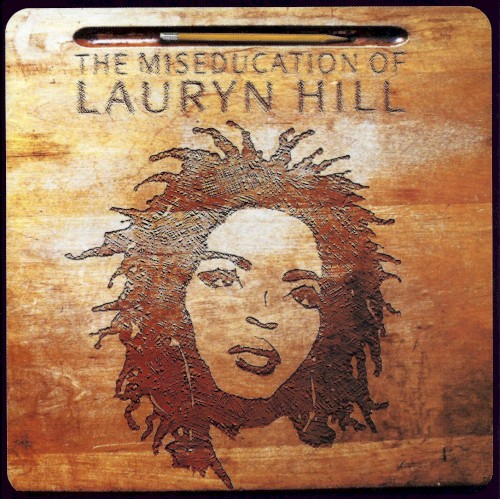
Her 1998 solo debut, The Miseducation of Lauryn Hill, transformed her into an even larger cultural figure. Featuring "Doo Wop (That Thing)," "Ex-Factor," "Everything Is Everything," "Lost Ones," and "To Zion," the album blended deeply personal songwriting with hip-hop, soul, reggae, and gospel. It debuted at No. 1 and earned Hill five Grammy Awards in a single night, including Album of the Year.
Despite never releasing a second conventional solo studio album, Hill's influence has remained enormous. Her combination of rapping and singing helped reshape the possibilities for artists moving between hip-hop and R&B, while The Miseducation of Lauryn Hill continues to be regarded as one of the defining albums of its era.
Studio albums
Similar Artists
History
Ms. Lauryn Hill was born Lauryn Noelle Hill on May 26, 1975, in East Orange, New Jersey, and grew up in nearby South Orange. Music played an important role in her life from an early age, but Hill also demonstrated considerable talent as an actress and performer.
As a teenager, she appeared on television and film, including a recurring role on As the World Turns. She gained wider recognition in the 1993 film Sister Act 2: Back in the Habit, where her performance introduced both her acting ability and powerful singing voice to a large mainstream audience.
At the same time, Hill was developing musically alongside Wyclef Jean and Pras Michel. The trio eventually became known as Fugees, a shortened version of "refugees."
Fugees released their debut album, Blunted on Reality, in 1994. Although it attracted some attention, the record gave little indication of how dramatically the group's fortunes would change with their next release.
Their second album, The Score, arrived in 1996 and became one of the defining hip-hop albums of the decade.
Combining hip-hop with reggae, soul, R&B, and Caribbean influences, the album featured "Fu-Gee-La," "Ready or Not," and a reworking of "Killing Me Softly with His Song."
Hill's performance on "Killing Me Softly" became one of the group's defining moments. Her soulful lead vocal demonstrated that she was not simply an exceptional rapper but also a singer capable of carrying a major crossover record.
The Score became an enormous commercial success and reached No. 1 on the Billboard 200. The album won the Grammy Award for Best Rap Album, while "Killing Me Softly" earned Best R&B Performance by a Duo or Group with Vocal.
As Fugees became international stars, Hill increasingly emerged as a distinctive creative voice in her own right.
Following the group's initial run, she began developing material for her first solo album.
The result was The Miseducation of Lauryn Hill, released on August 25, 1998 through Ruffhouse Records and Columbia Records.
The album drew heavily from Hill's personal experiences. Its songs explored love, heartbreak, motherhood, spirituality, fame, self-respect, relationships, and personal growth.
Musically, Miseducation crossed traditional genre boundaries. Hip-hop existed naturally alongside soul, reggae, gospel, acoustic music, and R&B, while Hill moved between singing and rapping without treating the two as separate identities.
"Lost Ones" opened the album with one of Hill's most forceful rap performances. "Ex-Factor" explored the emotional damage of a troubled relationship, while "To Zion" addressed Hill's decision to become a mother despite concerns that pregnancy could interfere with her rapidly growing career.
Portions of the album were recorded at Tuff Gong Studios in Jamaica, further strengthening the reggae and Caribbean influences already present in Hill's music.
The album's lead single, "Doo Wop (That Thing)," became a major cultural moment. Combining rapping, singing, soul instrumentation, and socially conscious lyrics about relationships and self-respect, the song debuted at No. 1 on the Billboard Hot 100.
Other songs including "Ex-Factor," "Everything Is Everything," "Nothing Even Matters," and "Can't Take My Eyes Off of You" helped demonstrate the remarkable range of the album.
The Miseducation of Lauryn Hill debuted at No. 1 on the Billboard 200 and quickly became one of the most acclaimed albums of the decade.
Its impact became even more significant at the 1999 Grammy Awards.
Hill received 10 nominations and won five awards, including Album of the Year, Best New Artist, Best R&B Album, Best R&B Song, and Best Female R&B Vocal Performance.
She became the first woman to win five Grammy Awards in a single night. The Album of the Year victory also represented an important moment for hip-hop, giving a record deeply rooted in the genre one of the music industry's highest honors.
At only 23 years old, Hill had become one of the biggest artists in popular music.
Rather than immediately creating another polished studio album, however, Hill increasingly withdrew from the traditional music-industry cycle surrounding celebrity, promotion, touring, and commercial expectations.
Her next major release was radically different.
Hill recorded an intimate performance for MTV Unplugged in 2001, appearing primarily with an acoustic guitar and performing largely unreleased material.
The performance was released in 2002 as MTV Unplugged No. 2.0.
Songs including "Mystery of Iniquity," "I Gotta Find Peace of Mind," and "Just Like Water" presented a rawer, more introspective version of Hill. The record contained extended performances and spoken reflections and deliberately avoided much of the polished production that had characterized Miseducation.
The project received a divided response when it was released but gradually developed a strong following among listeners attracted to its vulnerability and uncompromising approach.
Hill continued performing selectively during the following decades rather than returning to a conventional album-release schedule.
Fugees periodically reunited as well, including performances and touring plans that brought Hill, Wyclef Jean, and Pras Michel back together years after The Score.
Meanwhile, the reputation of The Miseducation of Lauryn Hill continued to grow.
The album became a major influence on generations of artists who blurred the boundaries between rapping and singing. Its combination of personal songwriting, hip-hop, neo-soul, reggae, gospel, and R&B created a model that can be heard throughout modern popular music.
Hill's influence is particularly significant because of how concentrated her solo catalog remains.
While many legendary artists developed their reputations across dozens of albums, Hill's place in music history rests largely on one extraordinary solo studio record, her work with Fugees, and a relatively small collection of later recordings and performances.
She has periodically returned to Miseducation in concert, including major tours marking the album's 20th and 25th anniversaries.
In 2024, The Miseducation of Lauryn Hill was inducted into the Grammy Hall of Fame, formally recognizing its historical and cultural significance.
Hill's importance extends beyond any single album or song. She helped demonstrate that a hip-hop artist could operate at the highest level as both an MC and a singer while writing intensely personal material without abandoning social commentary or musical experimentation.
That approach became increasingly common in the decades that followed.
From the international breakthrough of The Score to the landmark achievement of The Miseducation of Lauryn Hill, Ms. Lauryn Hill created one of the most influential bodies of work of the 1990s.
Her discography may be unusually small for an artist of her stature, but its impact is enormous. Decades after her breakthrough, Hill remains one of the defining voices connecting hip-hop, R&B, soul, reggae, and modern popular music.
Artist Facts
- Ms. Lauryn Hill was already a successful actress before her solo breakthrough, appearing prominently in Sister Act 2: Back in the Habit in 1993.
- The Miseducation of Lauryn Hill remains her only conventional solo studio album, despite becoming one of the most celebrated albums in hip-hop and R&B history.
- Hill became the first woman to win five Grammy Awards in a single night at the 1999 Grammy Awards.
- Portions of The Miseducation of Lauryn Hill were recorded at Tuff Gong Studios in Jamaica, the legendary studio associated with Bob Marley.
- John Legend played piano on "Everything Is Everything" years before becoming a major recording artist himself.