Artist
GZA/Genius
Wu‐Tang Clan
GZA, also known as The Genius, is an American rapper and songwriter born Gary Grice in New York City. A founding member of the Wu-Tang Clan, he is known for his precise delivery, complex rhyme schemes, vivid metaphors, and unusually cerebral approach to hip-hop.
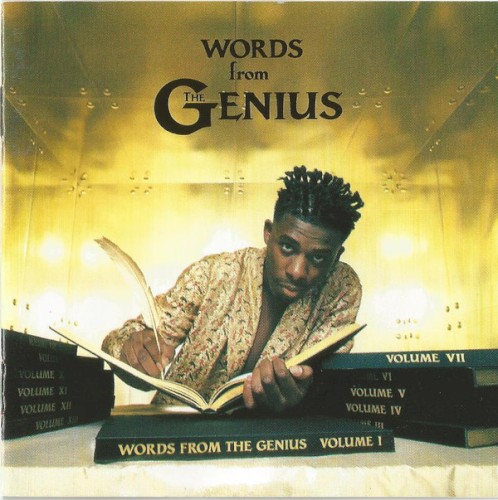
Before Wu-Tang formed, GZA recorded as The Genius and released Words from the Genius in 1991. His career changed dramatically after joining cousins RZA and Ol' Dirty Bastard and helping form Wu-Tang Clan, whose 1993 debut Enter the Wu-Tang (36 Chambers) became one of the most influential albums in hip-hop history.
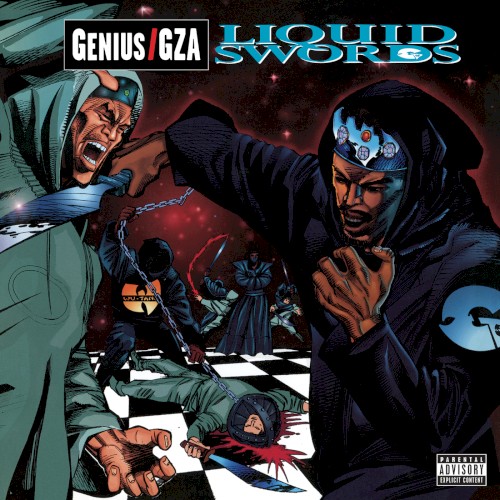
GZA's defining solo work arrived with Liquid Swords in 1995. Produced primarily by RZA, the album combined dark, cinematic production with songs such as "Liquid Swords," "4th Chamber," "Shadowboxin'," "Cold World," "Duel of the Iron Mic," and "Labels." Its dense writing, martial-arts imagery, street narratives, and conceptual structure established it as one of the most celebrated solo albums to emerge from Wu-Tang Clan.
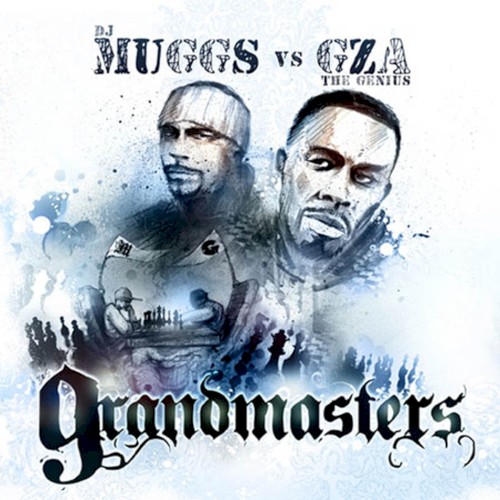
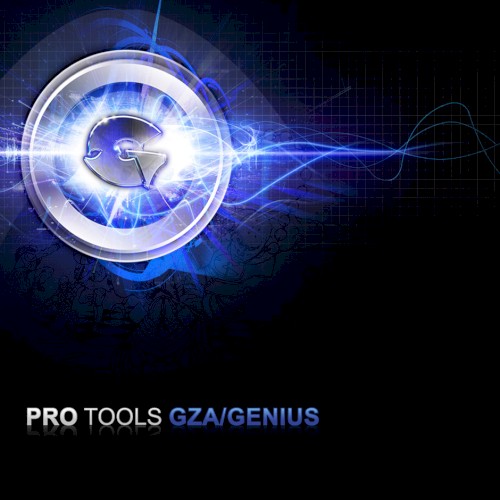
He continued his solo career with Beneath the Surface, Legend of the Liquid Sword, the DJ Muggs collaboration Grandmasters, and Pro Tools. Beyond music, GZA has become closely associated with chess, science, education, and lectures exploring the connections between hip-hop and subjects such as physics.
Known for a calm, methodical style rather than theatrical delivery, GZA has remained one of Wu-Tang Clan's most respected lyricists. His influence can be heard throughout underground and lyrical hip-hop, while Liquid Swords remains a benchmark for concept-driven rap albums.
Studio albums
Similar Artists
History
GZA's story begins in New York City, where Gary Grice became fascinated by hip-hop during the culture's early development. As a young listener and aspiring MC, he absorbed the rhyming styles emerging from the Bronx and began developing his own approach to writing.
Two of his most important early collaborators were his cousins Robert Diggs and Russell Jones, who would later become known as RZA and Ol' Dirty Bastard.
The three began working together in the early 1980s under the name All in Together Now. Although the group did not achieve major commercial success, the partnership established a creative connection that would eventually become the foundation of Wu-Tang Clan.
Before Wu-Tang existed, GZA pursued a conventional solo record deal.
Performing as The Genius, he signed with Cold Chillin' Records, the influential New York label associated with artists including Big Daddy Kane, Kool G Rap, and Biz Markie.
In 1991, he released his debut album, Words from the Genius.
Produced largely by Easy Mo Bee, the album showed flashes of GZA's lyrical ability but failed to achieve significant commercial success. His relationship with the label became frustrating, and the experience contributed to his growing distrust of the traditional record industry.
RZA had experienced similar difficulties during an early solo deal of his own.
The two reconnected with Ol' Dirty Bastard and began developing a much more ambitious plan.
Rather than simply forming another rap group, they envisioned a large collective whose individual members could establish solo careers while remaining connected under a single identity.
That idea became the Wu-Tang Clan.
The group expanded to include Method Man, Raekwon, Ghostface Killah, Inspectah Deck, U-God, and Masta Killa, with Cappadonna becoming closely associated with the collective as well.
GZA's intelligence, measured personality, and lyrical precision helped earn him the nickname The Genius within a group full of unusually distinctive MCs.
Wu-Tang Clan released Enter the Wu-Tang (36 Chambers) in 1993.
The album's raw production, kung-fu-film samples, unconventional slang, and rotating cast of rappers sounded radically different from much of mainstream hip-hop at the time.
GZA appeared throughout the project, including memorable performances on "Protect Ya Neck," "Da Mystery of Chessboxin'," and "Clan in da Front."
One of the most innovative aspects of Wu-Tang's rise was its business structure.
Rather than requiring every member to sign individually to the same company, Wu-Tang negotiated a system allowing members to pursue solo deals with different labels.
GZA signed with Geffen Records.
His first major post-Wu solo appearance was "I Gotcha Back," which appeared on the soundtrack to the 1994 film Fresh.
Then came the album that would define his solo career.
Liquid Swords was released in November 1995.
Produced primarily by RZA, the album developed an atmosphere unlike almost anything else in mid-1990s hip-hop. Sparse drums, eerie soul samples, dialogue from martial-arts films, and dark melodies created a cinematic backdrop for GZA's exceptionally dense writing.
The opening title track immediately established the tone.
Other songs included "Duel of the Iron Mic," "Living in the World Today," "Gold," "Cold World," "Labels," "4th Chamber," "Shadowboxin'," "Investigative Reports," and "I Gotcha Back."
Wu-Tang members appeared throughout the record, but the album remained unmistakably centered on GZA's worldview.
His writing stood apart because of its structure.
Rather than relying primarily on punchlines or personality, GZA frequently built entire verses around extended metaphors. "Labels" transformed record-company names into a sustained critique of the music business. Chess terminology, science, martial arts, crime stories, and street observations repeatedly appeared throughout his lyrics.
The restrained delivery made the writing even more effective.
Where other members of Wu-Tang could sound explosive or unpredictable, GZA often sounded almost detached, allowing the complexity of the words to provide the intensity.
Liquid Swords reached the Top 10 of the Billboard 200 and became one of the most acclaimed albums from Wu-Tang Clan's extraordinary first generation of solo releases.
That period also produced Method Man's Tical, Ol' Dirty Bastard's Return to the 36 Chambers, Raekwon's Only Built 4 Cuban Linx..., and Ghostface Killah's Ironman.
Together, those records demonstrated the effectiveness of Wu-Tang's unusual business model.
GZA returned to the Wu-Tang Clan for Wu-Tang Forever in 1997 before releasing his next solo album.
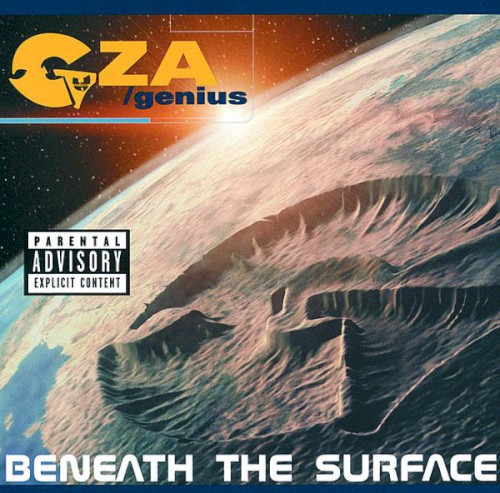
Beneath the Surface arrived in 1999.
Although inevitably compared with Liquid Swords, the album was commercially successful and reached No. 1 on Billboard's R&B/Hip-Hop Albums chart. Tracks included "Breaker, Breaker," "Publicity," and "Crash Your Crew."
GZA continued balancing solo work with Wu-Tang recordings.
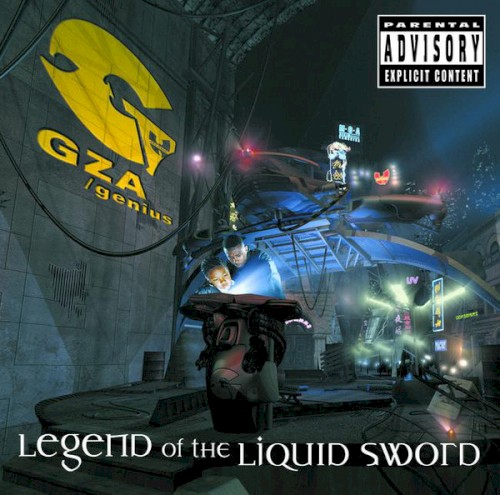
After contributing to The W in 2000 and Iron Flag in 2001, he released Legend of the Liquid Sword in 2002.
The title deliberately referenced his most famous album, but the record represented another stage in his development as a veteran MC.
In 2005, GZA partnered with DJ Muggs of Cypress Hill for Grandmasters.
The collaboration was particularly appropriate because both artists shared a fascination with dark production, strategy, and conceptual imagery.
Chess became a major theme throughout the project.
For GZA, chess had long been more than a casual hobby. The game's emphasis on planning, foresight, positioning, and consequences closely matched the strategic approach that appeared throughout his lyrics.
He returned with Pro Tools in 2008.
Released through Babygrande Records, the album featured Wu-Tang collaborators including RZA, Masta Killa, and Mathematics and included "Paper Plate," a track aimed at 50 Cent.
After Pro Tools, GZA's output became less focused on conventional solo-album cycles.
Instead, he increasingly pursued interests that had always existed alongside music.
Science became especially important.
GZA began visiting universities and educational institutions, giving lectures and participating in programs designed to connect hip-hop with science education.
He collaborated with educators on initiatives encouraging students to use rap and creative writing to understand scientific concepts.
His long-discussed project Dark Matter grew from that interest in physics, astronomy, and the universe.
The concept represented a natural extension of GZA's approach to hip-hop. Throughout his career, he had treated lyric writing as something that could incorporate technical language, philosophy, science, and complex systems without sacrificing the fundamentals of rap.
GZA also became closely associated with chess education and tournaments, reinforcing his image as one of hip-hop's most intellectually curious artists.
Meanwhile, his status within Wu-Tang continued growing.
The Clan's mythology, business model, solo albums, fashion, imagery, and vocabulary became increasingly influential throughout popular culture.
In 2025, Wu-Tang embarked on the Wu-Tang Forever: The Final Chamber tour, presented as the collective's final major tour. :chatgpt-content-reference{index="1"}
The following year brought another major milestone.
In 2026, Wu-Tang Clan were inducted into the Rock & Roll Hall of Fame, with GZA included among the inducted members. The honor formally recognized a collective whose influence had long since expanded beyond hip-hop into fashion, film, art, business, and global popular culture. :chatgpt-content-reference{index="2"}
GZA has also remained active independently, continuing to perform solo concerts built around both his individual catalog and Wu-Tang material. Current listings show him performing into late 2026. :chatgpt-content-reference{index="3"}
His legacy rests heavily on Liquid Swords, but reducing GZA to one album overlooks the larger significance of his approach.
He helped demonstrate that technical intelligence and conceptual writing could exist at the center of hardcore hip-hop.
His verses often reward repeated listening because individual lines connect to larger metaphors, references, and themes. Science, chess, martial arts, street life, music-industry politics, and philosophy can coexist within the same body of work.
That methodical style also provided an essential counterweight within Wu-Tang Clan.
The group worked because its members sounded different from one another. GZA's calm precision stood alongside Method Man's charisma, Ol' Dirty Bastard's unpredictability, Ghostface Killah's emotional intensity, Raekwon's cinematic storytelling, and Inspectah Deck's technical sharpness.
More than three decades after Wu-Tang's debut, GZA remains one of the clearest examples of hip-hop lyricism built around precision rather than excess.
And Liquid Swords remains what its title suggests: carefully sharpened, strategically deployed, and designed to cut.
Artist Facts
1. GZA's real name is Gary Grice, and he originally recorded under the name The Genius before adopting GZA as part of Wu-Tang Clan.
2. GZA released a solo album before Wu-Tang Clan existed, issuing Words from the Genius through Cold Chillin' Records in 1991.
3. GZA, RZA, and Ol' Dirty Bastard performed together before Wu-Tang as All in Together Now, making their musical partnership older than the Clan itself.
4. GZA is deeply interested in chess and science and has participated in educational programs and university lectures connecting hip-hop with subjects such as physics and scientific thinking.
5. GZA was inducted into the Rock & Roll Hall of Fame as a member of Wu-Tang Clan in 2026, more than three decades after the release of Enter the Wu-Tang (36 Chambers).
FAQ
- What is GZA's real name?
GZA's real name is Gary Grice. He was originally known professionally as The Genius and later adopted the name GZA when he became a founding member of Wu-Tang Clan.
- What genre is GZA?
GZA is primarily associated with East Coast hip-hop, hardcore hip-hop, lyrical hip-hop, and underground rap. His music is especially known for complex metaphors, conceptual writing, dark production, and precise rhyme structures.
- What is GZA's most famous album?
Liquid Swords, released in 1995, is GZA's defining solo album. Produced primarily by RZA, it includes "Liquid Swords," "4th Chamber," "Shadowboxin'," "Cold World," "Duel of the Iron Mic," and "Labels" and is widely regarded as one of the essential Wu-Tang solo albums.
- What are GZA's most famous songs?
Some of GZA's best-known solo songs include "Liquid Swords," "4th Chamber," "Shadowboxin'," "Cold World," "Duel of the Iron Mic," "Labels," "I Gotcha Back," and "Breaker, Breaker." He is also featured on numerous Wu-Tang Clan classics.
- Is GZA still active?
Yes. GZA remains active as a performer and member of Wu-Tang Clan. He participated in Wu-Tang's major Final Chamber tour era and continues performing solo shows. In 2026, he was inducted into the Rock & Roll Hall of Fame as a member of Wu-Tang Clan.