Artist
John Lee Hooker
US blues singer, songwriter & guitarist
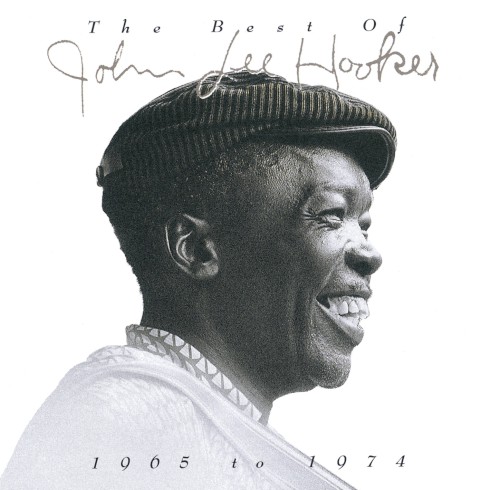
John Lee Hooker was an American blues singer, songwriter, and guitarist born near Clarksdale, Mississippi, on August 22, 1917. Known as the King of the Boogie, Hooker developed one of the most distinctive sounds in blues, built around hypnotic guitar patterns, foot-stomping rhythms, a deep conversational voice, and an instinctive approach to timing that often ignored traditional song structures.
After moving to Detroit, Hooker scored his breakthrough with "Boogie Chillen'" in 1948. The recording stripped the blues down to its essentials: Hooker's amplified guitar, voice, and pounding foot. Songs including "I'm in the Mood," "Crawling King Snake," "Dimples," "Boom Boom," "One Bourbon, One Scotch, One Beer," and "It Serves Me Right to Suffer" established him as one of the defining figures of electric blues.
Hooker's influence reached far beyond the blues. British rock bands including The Rolling Stones, The Animals, and The Yardbirds embraced his music, while later artists drew heavily from the driving boogie rhythm he helped popularize. His collaborations with Canned Heat, Bonnie Raitt, Carlos Santana, Van Morrison, and other artists connected his music with generations of blues and rock listeners.
His career experienced a major resurgence with 1989's The Healer, followed by successful albums including Mr. Lucky, Boom Boom, Chill Out, and Don't Look Back. Hooker was inducted into the Rock & Roll Hall of Fame in 1991 and received the Grammy Lifetime Achievement Award in 2000.
John Lee Hooker died in 2001 after more than five decades of recording and performing. His raw guitar sound, unmistakable voice, and hypnotic boogie remain foundational elements of modern blues and rock music.
Studio albums
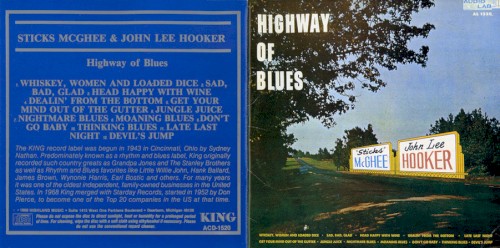 Highway of Blues1959Album
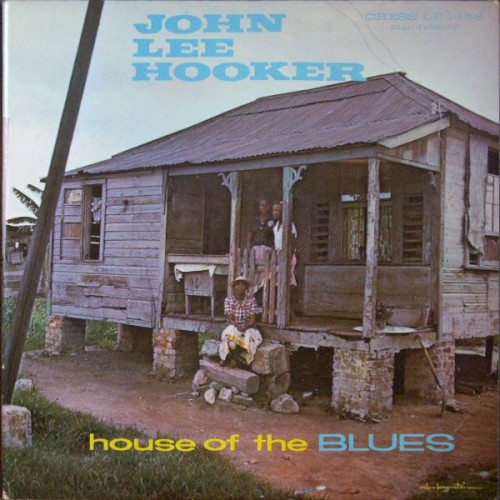 House of the Blues1959Album
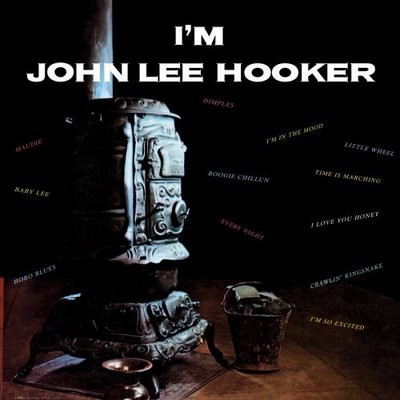 I’m John Lee Hooker1959Album
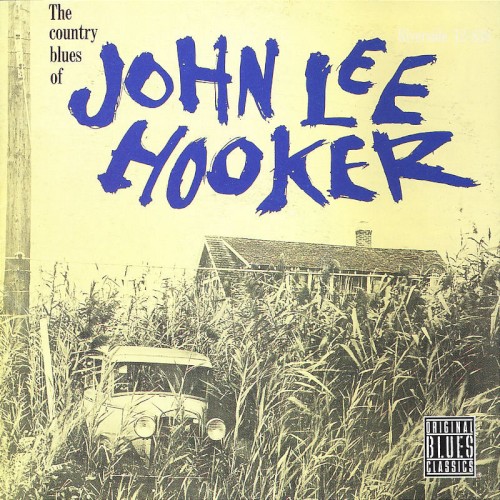 The Country Blues of John Lee Hooker1959Album
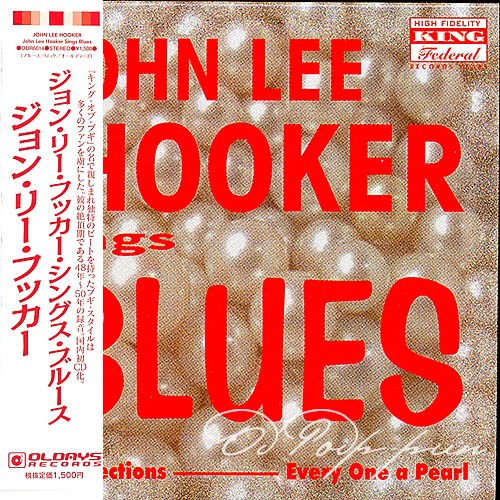 John Lee Hooker Sings Blues1960Album
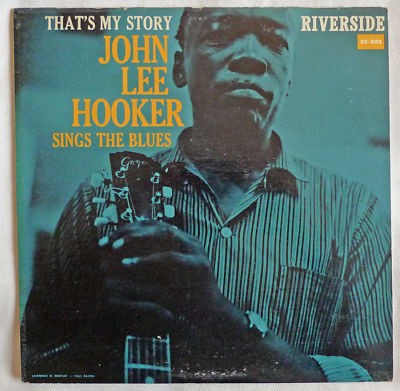 That’s My Story: John Lee Hooker Sings the Blues1960Album
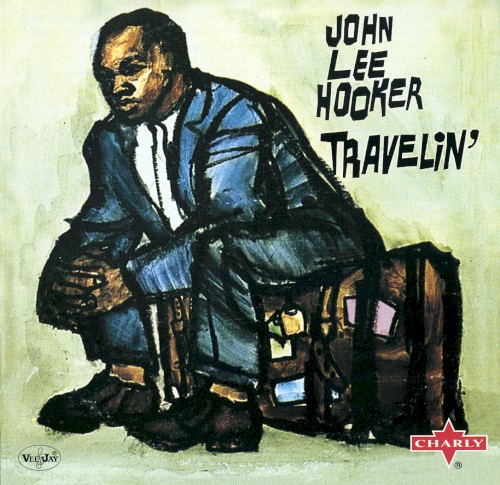 Travelin’1960Album
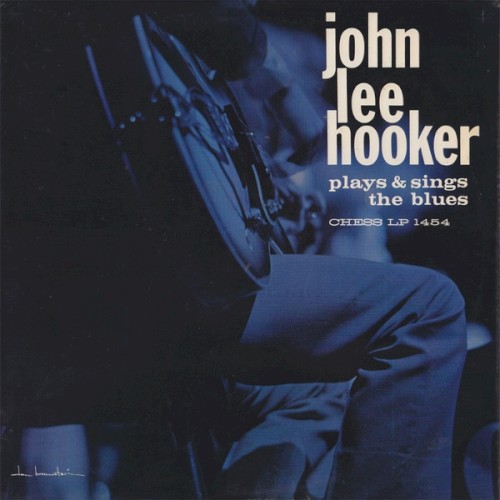 Plays and Sings the Blues1961Album
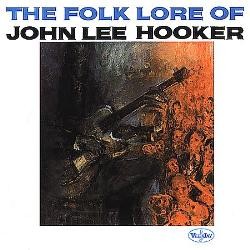 The Folk Lore of John Lee Hooker1961Album
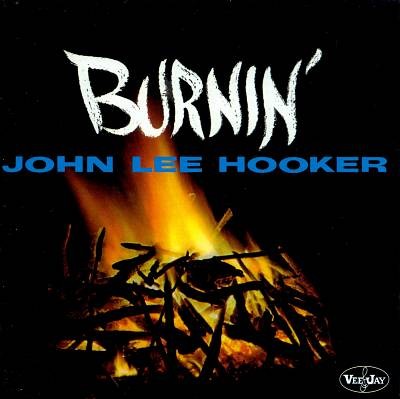 Burnin’1962Album
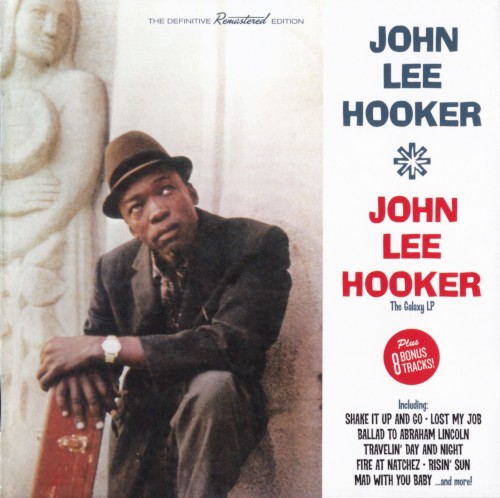 John Lee Hooker1962Album
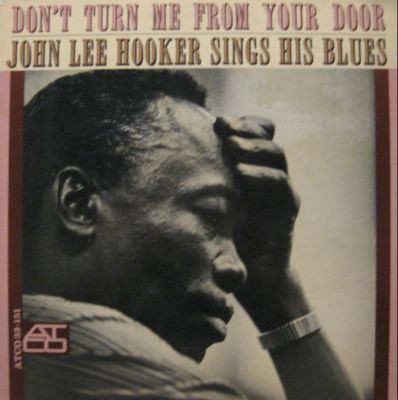 Don’t Turn Me From Your Door1963Album
Compilations
Similar Artists
History
John Lee Hooker was born near Clarksdale, Mississippi, on August 22, 1917, into a sharecropping family. His upbringing placed him close to the musical traditions of the Mississippi Delta, but one of the most important influences on his playing came directly from his family.
Hooker's stepfather, William Moore, was a blues guitarist who taught the young musician to play. Hooker later credited Moore with helping shape the unusual guitar style that would distinguish him from other blues performers.
Rather than developing around strict musical theory, Hooker's style grew from feel, rhythm, repetition, and instinct. His guitar playing could stay locked onto a single chord or rhythmic figure for long periods, creating a hypnotic groove that became one of his trademarks.
As a young man, Hooker left Mississippi and gradually made his way north. After spending time in Memphis and Cincinnati, he eventually settled in Detroit during the 1940s.
Detroit was undergoing enormous industrial expansion, and thousands of African Americans had moved north from the South in search of manufacturing jobs. Hooker became part of that migration.
By day, he worked in factories and other jobs. At night, he performed blues at house parties, clubs, and venues around Detroit's thriving Black entertainment district.
Hooker's music adapted naturally to the noisy urban environment.
He began playing electric guitar, amplifying the Delta-inspired style he had learned earlier in life. Instead of trying to imitate the sophisticated arrangements of larger blues bands, Hooker often relied on little more than his voice, guitar, and the relentless beat created by stomping his foot.
Local record-store owner Elmer Barbee recognized Hooker's talent and introduced him to producer Bernard Besman.
In 1948, Hooker entered the recording studio and cut several tracks. Among them was "Boogie Chillen'," a largely improvised performance that captured his stripped-down approach perfectly.
Modern Records released the recording nationally.
"Boogie Chillen'" became a major R&B success and established Hooker almost immediately as an important new blues artist. The record's repetitive guitar figure and propulsive rhythm helped establish the form of boogie that would become inseparable from his name.
Hooker followed with a remarkable series of recordings including "Hobo Blues," "Crawling King Snake," and "I'm in the Mood."
"I'm in the Mood" became another major hit in 1951 and featured Hooker's voice overdubbed against itself, an unusual studio technique for the period.
Hooker's early recording career is famously complicated.
Because blues musicians were often paid per recording session and label contracts could be restrictive, Hooker recorded for numerous companies, sometimes using different names to avoid contractual problems.
Over the years, recordings appeared under aliases including Texas Slim, Delta John, Birmingham Sam, John Lee Booker, and The Boogie Man.
His work appeared on labels including Modern, Sensation, Chess, King, Federal, Specialty, and many smaller companies.
That constant recording activity produced one of the most extensive and confusing discographies in blues history.
By the mid-1950s, Hooker established a more stable relationship with Vee-Jay Records.
The Vee-Jay period allowed him to work more consistently with backing musicians while retaining the rhythmic intensity that had defined his earlier solo recordings.
Albums and singles from this period helped introduce songs that would become central to his catalog.
In 1962, Hooker released "Boom Boom."
The song became one of his signature recordings, combining a memorable guitar riff, a full-band arrangement, and Hooker's conversational vocal delivery.
"Boom Boom" would later become particularly important to the British blues movement. The Animals recorded the song in 1964, helping introduce Hooker's music to an even larger rock audience.
The early 1960s brought another major change in Hooker's career.
As the American folk revival generated new interest in traditional blues musicians, Hooker began appearing at colleges, coffeehouses, folk festivals, and venues that attracted younger and often predominantly white audiences.
He sometimes returned to a more acoustic presentation during this period, connecting his modern Detroit recordings with the Delta and country-blues traditions that had shaped his earliest playing.
At the same time, musicians in Britain were becoming obsessed with American blues.
Groups including The Rolling Stones, The Animals, The Yardbirds, John Mayall's Bluesbreakers, and others openly drew inspiration from musicians such as Hooker, Muddy Waters, Howlin' Wolf, and B.B. King.
That admiration helped create a new international audience for Hooker's music.
As rock music expanded during the late 1960s and early 1970s, Hooker's influence became even more visible.
One of the most important collaborations of this period came with the American blues-rock band Canned Heat.
The musicians shared a deep admiration for Hooker's music, and the collaboration resulted in Hooker 'n Heat, released in 1971.
The double album combined Hooker's traditional approach with Canned Heat's amplified blues-rock style and became Hooker's first album to reach the charts.
The project demonstrated how naturally his music could connect with the emerging rock generation without requiring Hooker to fundamentally change his sound.
Throughout the 1970s, Hooker continued recording and touring, although commercial interest in traditional blues fluctuated.
His music nevertheless remained deeply influential.
Rock musicians increasingly adopted the driving boogie pattern that had been central to Hooker's sound since "Boogie Chillen'." Bands and guitarists including ZZ Top, George Thorogood, Foghat, Canned Heat, and numerous others developed variations of that rhythmic approach.
Hooker also continued collaborating with musicians from outside traditional blues.
His friendship with Van Morrison became particularly significant. Morrison had been influenced by Hooker since his early career and would eventually record and perform with him numerous times.
Hooker's profile received another boost when he appeared in the 1980 film The Blues Brothers, performing on the street outside the fictional Soul Food Cafe.
By the end of the 1980s, Hooker was already considered a blues legend.
Then something unexpected happened: his commercial career became bigger than ever.
In 1989, Hooker released The Healer.
Rather than simply recreating his old recordings, the album paired Hooker with prominent contemporary musicians including Carlos Santana, Bonnie Raitt, Los Lobos, George Thorogood, Charlie Musselwhite, and others.
The title track featured Santana, while Hooker's new version of "I'm in the Mood" with Bonnie Raitt helped introduce his music to another generation.
The Healer became the most commercially successful album of Hooker's career and won Grammy recognition.
Hooker had entered his seventies, yet instead of slowing down he was experiencing one of the most productive and visible periods of his life.
He followed The Healer with Mr. Lucky in 1991.
The album continued the collaborative approach and featured musicians including Van Morrison, Keith Richards, Carlos Santana, Albert Collins, and Johnny Winter.
Hooker's status as a bridge between traditional blues and modern rock had become undeniable.
That same year, he was inducted into the Rock & Roll Hall of Fame.
His induction reflected not only his accomplishments as a blues musician but also the extraordinary impact his rhythmic style had exerted on rock and roll.
Hooker's resurgence continued with Boom Boom in the early 1990s and Chill Out in 1995.
Chill Out earned further Grammy recognition and once again featured musicians from several generations of blues and rock.
In 1997, Hooker released Don't Look Back.
Produced by Van Morrison, the album brought together two artists whose musical relationship stretched back decades. Morrison performed extensively on the record, and the project earned additional Grammy Awards.
By this point, Hooker had become one of the most recognizable living representatives of the blues.
His honors continued to accumulate.
He received a star on the Hollywood Walk of Fame in 1997, and in 2000 he received the Grammy Lifetime Achievement Award.
What made Hooker's career particularly remarkable was its duration.
He had made his breakthrough before rock and roll had fully emerged as a genre, yet he remained active through the rise of rhythm and blues, rock and roll, the British Invasion, psychedelic rock, blues rock, arena rock, MTV, and the compact-disc era.
Each generation seemed to rediscover him.
The reason was partly the simplicity and flexibility of his music.
Hooker's songs frequently avoided predictable chord changes and traditional 12-bar blues structures. He might extend a section when the feeling demanded it, shorten another phrase, or remain on the same groove while allowing his voice and guitar to shape the momentum.
Musicians accompanying him often had to listen closely rather than simply follow a predetermined structure.
That unpredictability was not a limitation. It was fundamental to his sound.
His guitar playing could be raw and minimal, but a few repeated notes could create enormous tension. His voice sounded conversational and deeply lived-in, capable of moving between menace, humor, loneliness, and confidence without unnecessary decoration.
And beneath everything was the boogie.
The repetitive, foot-stomping rhythm Hooker brought from Mississippi to Detroit became one of the fundamental grooves of electric blues and rock music.
John Lee Hooker continued performing almost until the end of his life.
He died on June 21, 2001, leaving behind a career spanning more than half a century and recordings spread across dozens of labels.
His legacy can be heard everywhere from traditional blues to hard rock, boogie rock, garage rock, roots music, and modern guitar music.
Songs including "Boogie Chillen'," "Boom Boom," "Crawling King Snake," "I'm in the Mood," "Dimples," and "One Bourbon, One Scotch, One Beer" remain essential blues recordings.
More importantly, Hooker created a sound that belonged entirely to him.
A few guitar notes, a stomping foot, a deep voice, and a relentless groove were enough.
That simplicity made John Lee Hooker one of the most distinctive musicians in blues history and secured his reputation as the King of the Boogie.
Artist Facts
1. John Lee Hooker's breakthrough recording, "Boogie Chillen'," was released in 1948 and became a major R&B hit, establishing the hypnotic boogie rhythm that would define his career.
2. Hooker recorded for more than two dozen record labels and sometimes used aliases including Texas Slim, Delta John, John Lee Booker, and The Boogie Man to record outside existing contracts.
3. Hooker's song "Boom Boom" became a blues standard and was later recorded by The Animals, helping introduce his music to the British rock generation.
4. Hooker experienced the biggest commercial resurgence of his career in his seventies with The Healer, collaborating with artists including Bonnie Raitt, Carlos Santana, Los Lobos, and George Thorogood.
5. John Lee Hooker was inducted into the Rock & Roll Hall of Fame in 1991 and received the Grammy Lifetime Achievement Award in 2000.
FAQ
- What genre was John Lee Hooker?
John Lee Hooker was primarily a blues musician, particularly associated with Delta blues, Detroit blues, electric blues, and boogie. His highly rhythmic guitar style also became a major influence on blues rock, boogie rock, and rock and roll.
- What are John Lee Hooker's most famous songs?
Some of John Lee Hooker's best-known songs include "Boogie Chillen'," "Boom Boom," "I'm in the Mood," "Crawling King Snake," "Dimples," "One Bourbon, One Scotch, One Beer," "Hobo Blues," and "It Serves Me Right to Suffer."
- Why was John Lee Hooker called the King of the Boogie?
Hooker became known as the King of the Boogie because of the hypnotic, repetitive guitar rhythm that defined much of his music. His songs often used a driving one-chord groove reinforced by his foot stomping the beat, creating a style that strongly influenced later blues and rock musicians.
- What is John Lee Hooker's most famous album?
John Lee Hooker's career was built largely around singles rather than one definitive studio album, but The Healer became his biggest commercial album and introduced him to a new generation in 1989. Other important releases include I'm John Lee Hooker, It Serve You Right to Suffer, Hooker 'n Heat, Mr. Lucky, and Chill Out.
- Why is John Lee Hooker so influential?
John Lee Hooker developed a blues style that relied on rhythm, repetition, improvisation, and feel rather than rigid song structures. His distinctive boogie groove directly influenced generations of blues and rock musicians, including The Rolling Stones, The Animals, Canned Heat, ZZ Top, George Thorogood, and many others.