Artist
Creedence Clearwater Revival
Creedence Clearwater Revival were an American rock band formed in El Cerrito, California, best known for the classic lineup of John Fogerty, Tom Fogerty, Stu Cook, and Doug Clifford. Although they came from the San Francisco Bay Area, CCR developed a distinctive sound rooted in Southern blues, country, rock and roll, swamp rock, and traditional American music.
Led creatively by singer, guitarist, and primary songwriter John Fogerty, the band produced an extraordinary run of hits between 1968 and 1972. Songs such as "Proud Mary," "Bad Moon Rising," "Fortunate Son," "Green River," "Down on the Corner," "Who'll Stop the Rain," and "Have You Ever Seen the Rain?" became enduring staples of American rock.
Albums including Bayou Country, Green River, Willy and the Poor Boys, Cosmo's Factory, and Pendulum established CCR as one of the most successful bands of its era. Their music combined concise songwriting, memorable guitar riffs, Fogerty's unmistakable voice, and lyrics that often explored working-class life, war, politics, nature, and the mythology of the American South.
Despite their enormous success, internal tensions and disputes with their record label contributed to the band's breakup in 1972. CCR's original recording career lasted only a few years, but their catalog has remained extraordinarily popular and influential, making them one of the defining American rock bands of the late 1960s and early 1970s.
Studio albums
Similar Artists
History
The roots of Creedence Clearwater Revival stretch back to El Cerrito, California, in the late 1950s, when school friends John Fogerty, Stu Cook, and Doug Clifford began playing together in a group called The Blue Velvets.
John's older brother, Tom Fogerty, eventually joined the group as lead singer. The band performed locally and recorded a series of singles before signing with Fantasy Records, a San Francisco-based independent label.
Under Fantasy, the group was renamed The Golliwogs, a name imposed by the label rather than chosen by the musicians. During this period, John Fogerty increasingly emerged as the band's strongest singer, songwriter, guitarist, and creative force.
By 1967, the group wanted a new identity. The name Creedence Clearwater Revival was assembled from several sources: "Creedence" came from a friend of Tom Fogerty named Credence Newball, "Clearwater" was inspired by imagery associated with clean-water advertising, and "Revival" represented the band's renewed commitment to making music together.
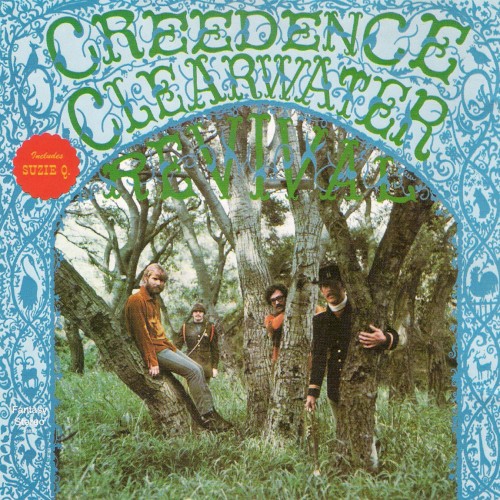
Their self-titled debut album, Creedence Clearwater Revival, arrived in 1968. The record included their versions of "Susie Q" and "I Put a Spell on You," both of which helped introduce the band's raw, blues-driven sound to a national audience.
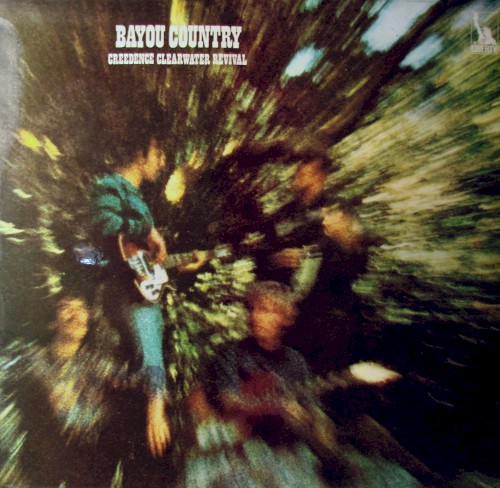
CCR's real breakthrough came in 1969 with Bayou Country.
The album featured "Proud Mary," written by John Fogerty, which became one of the band's signature songs. Its rolling rhythm and imagery of river life helped establish a Southern musical identity that was remarkable considering the band had been formed in suburban Northern California.
"Proud Mary" became a major hit and was later recorded by numerous artists, most famously Ike & Tina Turner.
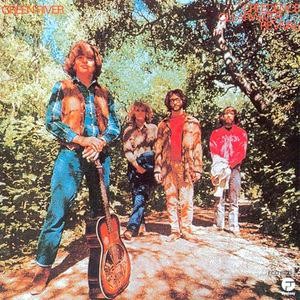
CCR followed Bayou Country with Green River later in 1969. The album included "Bad Moon Rising," "Green River," and "Lodi," further cementing the band's reputation for compact, immediately recognizable songs.
The pace of their output was extraordinary.
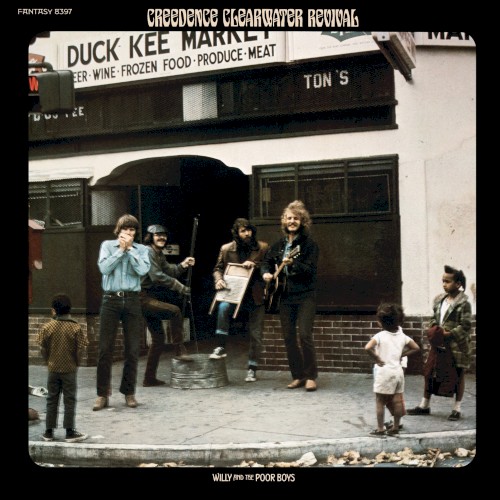
Their third album of 1969, Willy and the Poor Boys, contained "Down on the Corner" and "Fortunate Son." The latter became one of the defining protest songs of the Vietnam era.
Rather than criticizing soldiers, "Fortunate Son" targeted privilege and the social inequality surrounding military service, particularly the idea that wealthy and politically connected Americans could avoid sacrifices expected of others.
CCR were also one of the performers at the Woodstock festival in August 1969. Their appearance was not included in the original Woodstock film, however, which contributed to the fact that many casual listeners did not associate the band with the legendary event for decades.
By 1970, Creedence Clearwater Revival were one of the biggest rock bands in America.
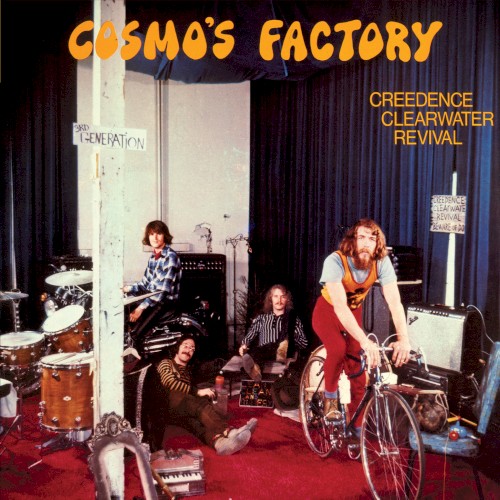
Their album Cosmo's Factory became the commercial and creative peak of their career. It included "Travelin' Band," "Who'll Stop the Rain," "Run Through the Jungle," "Up Around the Bend," "Lookin' Out My Back Door," and an extended version of "I Heard It Through the Grapevine."
The album demonstrated the band's remarkable ability to move between rock and roll, blues, country, psychedelia, and roots music without losing the direct simplicity that defined their sound.
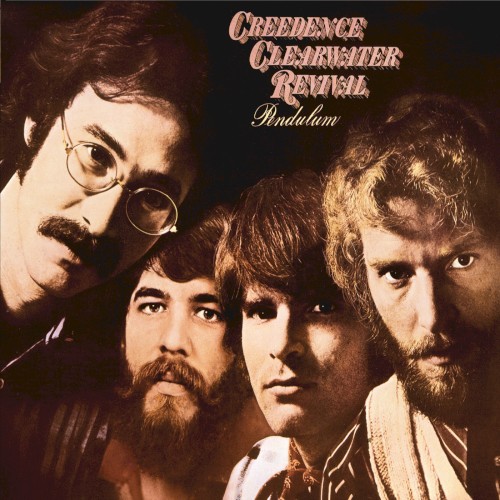
Later in 1970, CCR released Pendulum. Unlike many earlier recordings, the album incorporated more keyboards, horns, and studio experimentation. It featured "Have You Ever Seen the Rain?" and "Hey Tonight."
Despite their success, serious tensions were developing within the group.
John Fogerty had become the dominant creative force, handling most of the songwriting, lead vocals, production, and musical direction. Tom Fogerty, Stu Cook, and Doug Clifford increasingly wanted greater input into the band's music.
Tom Fogerty left CCR in 1971, reducing the group to a trio.
For their final album, Mardi Gras, released in 1972, John Fogerty insisted that Cook and Clifford contribute their own songs and lead vocals. The album represented a dramatic shift from the band's previous creative structure and received a much more mixed response than the albums that preceded it.
Later that year, Creedence Clearwater Revival officially broke up.
The end of the band did not end the conflicts surrounding its music. John Fogerty's relationship with Fantasy Records and label owner Saul Zaentz became the source of years of legal and financial disputes.
Fogerty launched a solo career and eventually produced successful albums and songs including Centerfield, "The Old Man Down the Road," and "Rock and Roll Girls." However, his battles over ownership and publishing rights to the CCR catalog remained a major part of his career for decades.
Tom Fogerty also pursued solo music before his death in 1990.
Stu Cook and Doug Clifford later formed Creedence Clearwater Revisited, performing CCR material on tour for many years, although John Fogerty was not part of the group.
Creedence Clearwater Revival were inducted into the Rock & Roll Hall of Fame in 1993, recognizing their enormous influence and remarkably concentrated body of work.
One of the most unusual aspects of CCR's career is how much music they produced in such a short period. Between 1968 and 1972, the band released seven studio albums, with five of their most important records arriving in roughly two years.
CCR also developed one of rock's strangest chart statistics. The band scored several singles that reached No. 2 on the Billboard Hot 100 but never had a No. 1 single in the United States.
That statistic does little to reflect the longevity of their music. Songs such as "Fortunate Son," "Proud Mary," "Bad Moon Rising," "Have You Ever Seen the Rain?," and "Green River" have remained deeply embedded in American popular culture.
Their music has appeared constantly in films, television, radio, sporting events, commercials, and political and historical documentaries. In particular, CCR songs became strongly associated with depictions of the Vietnam War, even though much of that connection developed through movies and television years after the band's breakup.
What made Creedence Clearwater Revival distinctive was their ability to make music that sounded timeless even when it was new. They drew heavily from blues, country, gospel, rockabilly, R&B, and early rock and roll while writing songs that were concise, memorable, and immediately identifiable.
John Fogerty's raspy voice and economical guitar playing gave the band its unmistakable front-end sound, while Stu Cook and Doug Clifford created a remarkably tight rhythm section. Tom Fogerty's rhythm guitar helped anchor the group's early recordings.
Their original career lasted only about four years at the height of their popularity, yet Creedence Clearwater Revival produced one of the deepest catalogs of recognizable songs in American rock.
Decades after their breakup, CCR remain a defining example of American roots rock: direct, powerful, melodic, and built to last.
Artist Facts
- Creedence Clearwater Revival were from Northern California, not the American South, despite the swampy Southern imagery that defined much of their music.
- CCR performed at Woodstock in 1969, but their set was left out of the original movie, making their appearance much less widely remembered than those of many other performers.
- The band had an unusual Billboard record, scoring multiple No. 2 singles without ever reaching No. 1 on the Hot 100.
- Before becoming CCR, the group performed as The Blue Velvets and later The Golliwogs, a name given to them by their record label.
- CCR released seven studio albums between 1968 and 1972, an exceptionally productive run that created nearly their entire classic catalog in just a few years.
FAQ
- Who were the members of Creedence Clearwater Revival?
The classic Creedence Clearwater Revival lineup consisted of John Fogerty on vocals and lead guitar, Tom Fogerty on rhythm guitar, Stu Cook on bass, and Doug Clifford on drums. Tom Fogerty left the group in 1971, and CCR continued briefly as a trio.
- What genre were Creedence Clearwater Revival?
CCR are primarily associated with roots rock, swamp rock, blues rock, country rock, and classic rock. Their music blended blues, country, rock and roll, gospel, R&B, and Southern musical imagery despite the band being from California.
- What is Creedence Clearwater Revival's most famous album?
Cosmo's Factory, released in 1970, is generally considered one of CCR's defining albums. It includes "Who'll Stop the Rain," "Run Through the Jungle," "Up Around the Bend," "Travelin' Band," and "Lookin' Out My Back Door." Green River and Willy and the Poor Boys are also central to the band's legacy.
- What are Creedence Clearwater Revival's most famous songs?
Some of CCR's best-known songs include "Proud Mary," "Fortunate Son," "Bad Moon Rising," "Have You Ever Seen the Rain?," "Green River," "Down on the Corner," "Who'll Stop the Rain," and "Up Around the Bend."
- Why did Creedence Clearwater Revival break up?
CCR broke up because of growing creative and business tensions within the band. John Fogerty had become the dominant songwriter, singer, producer, and musical leader, while the other members wanted greater creative control. Tom Fogerty left in 1971, and the remaining trio disbanded after releasing Mardi Gras in 1972.