Artist
The Doors
The Doors were an American rock band formed in Los Angeles, California, in 1965 by singer Jim Morrison, keyboardist Ray Manzarek, guitarist Robby Krieger, and drummer John Densmore. Combining psychedelic rock, blues, jazz, poetry, and theatrical performance, the group developed one of the most distinctive sounds and images of the late 1960s.
Their self-titled 1967 debut album introduced classics including "Break On Through (To the Other Side)," "Light My Fire," and "The End," immediately establishing The Doors as one of America's most important new rock bands. Morrison's dark lyrics and unpredictable stage presence became central to the group's identity, while Manzarek's keyboards, Krieger's expressive guitar playing, and Densmore's jazz-influenced drumming gave the band a sound unlike virtually anyone else.
Over a remarkably short period, The Doors released a run of influential albums including Strange Days, Waiting for the Sun, The Soft Parade, Morrison Hotel, and L.A. Woman. Songs such as "People Are Strange," "Hello, I Love You," "Roadhouse Blues," "Riders on the Storm," and "Love Her Madly" became enduring rock standards.
Morrison died in Paris in 1971 at age 27, effectively ending the band's classic era. Although the surviving members briefly continued recording without him, The Doors' legacy remains centered on the original four musicians and the six studio albums they created together. Their combination of poetry, darkness, improvisation, blues, and psychedelia continues to influence rock musicians and listeners generations later.
Studio albums
Compilations
Similar Artists
History
The Doors were formed in Los Angeles in 1965, beginning with a chance meeting between Jim Morrison and Ray Manzarek on Venice Beach. The two had known each other while studying film at UCLA, and Morrison told Manzarek that he had been writing songs.
According to the band's often-repeated origin story, Morrison recited the lyrics to a song called "Moonlight Drive." Manzarek was impressed and suggested that they form a band.
Manzarek had already been playing music with his brothers and soon began putting together a new group with Morrison. Drummer John Densmore, who had a background in jazz, joined the developing lineup. Guitarist Robby Krieger, who had studied flamenco guitar and played with Densmore in another group, completed the classic quartet.
The band took its name from Aldous Huxley's book The Doors of Perception, whose title itself referenced a line from poet William Blake about the "doors of perception."
One of the most unusual aspects of The Doors was that they did not use a permanent bass guitarist in their core lineup. Ray Manzarek frequently played bass lines with his left hand on a keyboard bass while simultaneously performing organ parts with his right. Studio bassists were sometimes brought in for recordings.
The Doors initially signed a contract with Columbia Records, but the relationship produced no album and the label eventually released them from the deal.
Their fortunes changed after they became the house band at the Whisky a Go Go on the Sunset Strip. Their intense performances attracted attention, particularly their extended interpretation of "The End."
Elektra Records president Jac Holzman eventually signed the band, beginning the partnership that would produce their classic catalog.
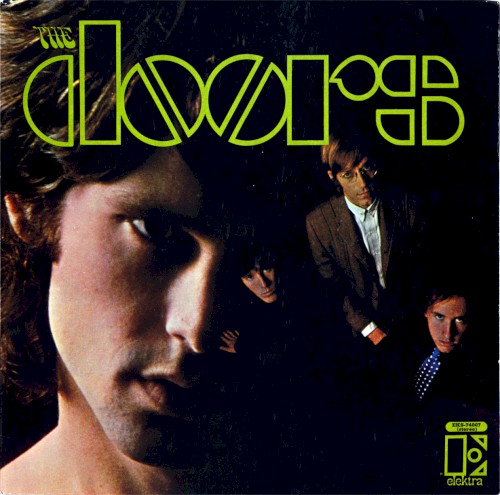
The Doors released their self-titled debut album in January 1967. Produced by Paul A. Rothchild, the record included "Break On Through (To the Other Side)," "Soul Kitchen," "The Crystal Ship," "Alabama Song," "Light My Fire," and the nearly 12-minute "The End."
The album quickly established the band's unique identity. Morrison combined poetic and often disturbing imagery with a charismatic vocal performance, while Manzarek's keyboards gave the music an instantly recognizable sound.
The breakthrough came with "Light My Fire," written primarily by Robby Krieger. An edited version of the song became a No. 1 hit in the United States in 1967 and transformed The Doors into major stars.
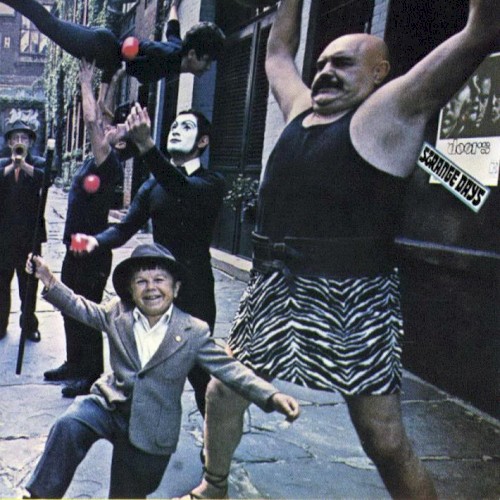
The band's second album, Strange Days, followed later that same year. It included "People Are Strange," "Love Me Two Times," "Moonlight Drive," and the ambitious "When the Music's Over."
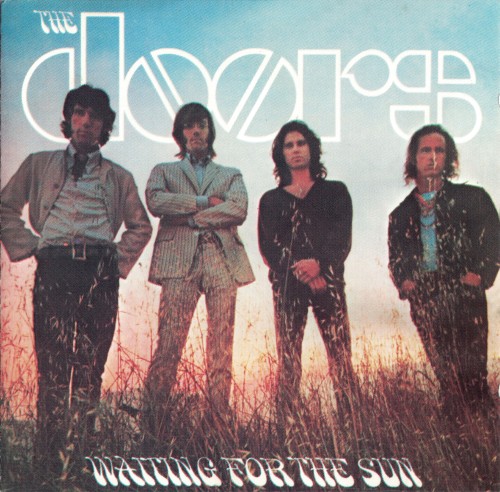
The Doors continued their rapid pace with Waiting for the Sun in 1968. The album became their first and only studio album to reach No. 1 on the Billboard 200 and included "Hello, I Love You," "Five to One," and "The Unknown Soldier."
By this point, however, Morrison's unpredictable behavior was becoming increasingly central to the band's public story. His confrontational performances, heavy drinking, and conflicts with authorities often generated as much attention as the music.
One of the most notorious incidents occurred during a concert in Miami in March 1969, when Morrison was accused of exposing himself onstage. He was eventually convicted on charges related to the performance, although questions about exactly what happened remained controversial. Decades later, Florida Governor Charlie Crist granted Morrison a posthumous pardon.
Musically, the band continued experimenting.
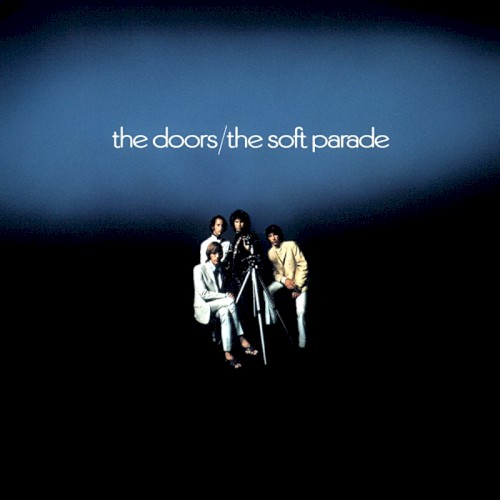
The Soft Parade arrived in 1969 and incorporated brass and string arrangements, giving portions of the album a more elaborate sound. It included "Touch Me," one of the band's biggest singles.
The album also marked a change in songwriting credits. Earlier Doors albums typically credited songs collectively to the band, but increasing differences between Morrison and Krieger led to individual songwriting credits becoming more common.
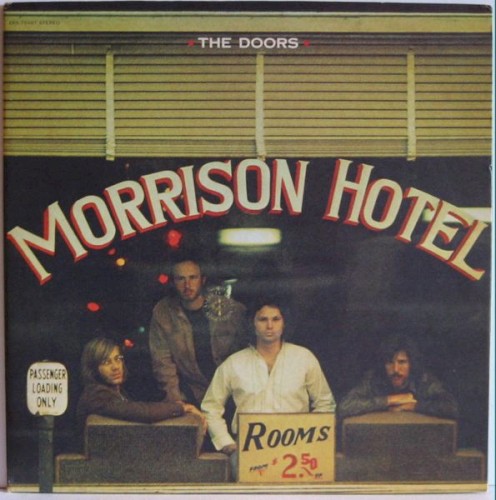
In 1970, the group returned to a heavier blues-rock sound with Morrison Hotel. Songs such as "Roadhouse Blues," "Peace Frog," "Waiting for the Sun," and "Queen of the Highway" stripped away much of the orchestration of The Soft Parade and emphasized the band's blues influences.
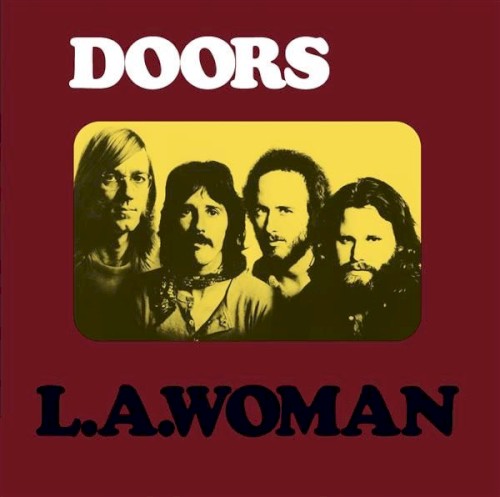
Their final studio album with Jim Morrison was L.A. Woman, released in 1971.
The album was recorded under unusual circumstances. Longtime producer Paul A. Rothchild left the project, and the band worked with engineer Bruce Botnick while producing much of the record themselves.
The resulting album became one of their most celebrated.
L.A. Woman included "Love Her Madly," "L.A. Woman," "The Changeling," and "Riders on the Storm." The latter combined Morrison's haunting vocal with Manzarek's atmospheric electric piano and the sound of rain and thunder, creating one of the band's most recognizable recordings.
Shortly after completing the album, Morrison moved to Paris with Pamela Courson, hoping to escape the pressures surrounding his career and focus more seriously on writing.
On July 3, 1971, Jim Morrison died in Paris at age 27. He was buried at Père Lachaise Cemetery, where his grave eventually became one of the cemetery's most frequently visited sites.
Morrison's death did not immediately end The Doors.
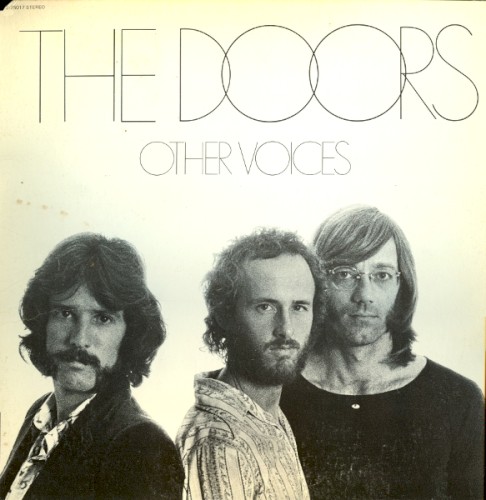
Manzarek, Krieger, and Densmore continued as a trio and released Other Voices in 1971 and Full Circle in 1972. Manzarek and Krieger took on much of the lead-vocal work, but the albums could not recreate the chemistry or commercial impact of the Morrison-era group.
The surviving members eventually stopped working together under The Doors name.
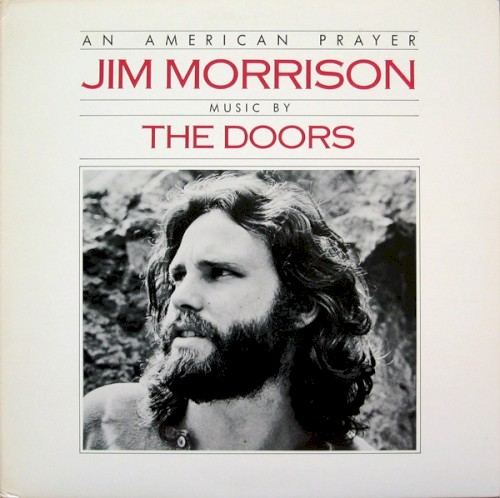
In 1978, however, Manzarek, Krieger, and Densmore reunited musically for An American Prayer. The project combined previously recorded spoken-word poetry by Morrison with newly recorded instrumental backing from the surviving Doors.
As the decades passed, the band's reputation continued to grow.
The Doors' recordings became staples of classic-rock radio, while Morrison's writing, image, and early death contributed to his status as one of rock music's most enduring cultural figures.
The band was inducted into the Rock & Roll Hall of Fame in 1993, recognizing the enormous influence of the original quartet.
Interest in The Doors also expanded through books, documentaries, archival recordings, and Oliver Stone's 1991 film The Doors, which introduced the band's story to another generation.
Ray Manzarek and Robby Krieger later performed Doors material together under several names, although disputes arose over the use of The Doors name. Ray Manzarek died in 2013, leaving Krieger and John Densmore as the surviving members of the classic lineup.
The Doors' influence is difficult to place within a single genre. Their music drew from blues, jazz, classical music, psychedelic rock, garage rock, poetry, and theatrical performance. They could create concise pop songs such as "Hello, I Love You" and then stretch into long, improvisational pieces such as "The End" and "When the Music's Over."
Each member played an essential role.
Morrison brought the voice, words, and theatrical presence. Manzarek created much of the band's harmonic identity through organ, piano, and keyboard bass. Krieger contributed an unconventional guitar style influenced by flamenco and blues while writing several of the band's biggest songs. Densmore's jazz background gave their music rhythmic flexibility that separated them from many traditional rock bands.
Their classic recording career lasted only from 1967 to 1971, yet in that brief period The Doors created six studio albums with Jim Morrison and a catalog containing some of the most recognizable songs of the era.
More than half a century later, The Doors remain one of the defining American bands of the 1960s, their music still carrying the mysterious, dark, and unpredictable quality that made them unique from the beginning.
Artist Facts
- The Doors took their name from Aldous Huxley's The Doors of Perception, whose title was inspired by a passage written by poet William Blake.
- The classic Doors lineup had no permanent bass guitarist, with Ray Manzarek frequently playing bass parts on a keyboard while performing organ with his other hand.
- Robby Krieger wrote "Light My Fire," which became the band's first No. 1 single and one of the most recognizable songs of the 1960s.
- Before signing with Elektra, The Doors had an earlier deal with Columbia Records that never produced an album.
- Jim Morrison is buried at Père Lachaise Cemetery in Paris, where his grave became one of the cemetery's best-known destinations.
FAQ
- Who were the members of The Doors?
The classic lineup of The Doors consisted of Jim Morrison on vocals, Ray Manzarek on keyboards, Robby Krieger on guitar, and John Densmore on drums. Unlike most rock bands, The Doors did not have a permanent bass guitarist in their core lineup.
- What genre were The Doors?
The Doors are most commonly associated with psychedelic rock, blues rock, and classic rock, but their music also incorporated jazz, garage rock, classical influences, spoken-word poetry, and extended improvisation.
- What is The Doors' most famous album?
The band's self-titled debut, The Doors, released in 1967, is generally considered their defining album. It includes "Break On Through (To the Other Side)," "Light My Fire," "The Crystal Ship," and "The End." L.A. Woman is also widely regarded as one of their greatest albums.
- What are The Doors' most famous songs?
Some of The Doors' best-known songs include "Light My Fire," "Riders on the Storm," "People Are Strange," "Break On Through (To the Other Side)," "Roadhouse Blues," "The End," "L.A. Woman," "Love Her Madly," and "Hello, I Love You."
- Why did The Doors break up?
The classic era of The Doors ended following Jim Morrison's death in 1971 at age 27. Ray Manzarek, Robby Krieger, and John Densmore continued recording together for two additional studio albums, but the group eventually stopped operating as The Doors.